Chat with our team

Coca Cola Fleet evaluation

Home / Coca Cola Fleet evaluation

Coca-Cola BrasĂ­lia Fleet Evaluation Documents Improved Fuel Efficiency and Reduced Exhaust Smoke

Location: Brasília, Brazil Subject: Real-world fleet pilot evaluating the SUPERTECH® Combustion Optimizer under commercial delivery operations, including fuel efficiency and exhaust smoke behavior.

How did Coca-Cola BrasĂ­lia address the challenge of fleet emissions?

Coca-Cola Brasília (Brasal Refrigerantes S.A.) undertook an evaluation of SuperTech® to better understand exhaust smoke behavior and operational performance within its heavy-duty logistics fleet.

The evaluation combined independent smoke-opacity testing with a real-world operational trial, conducted on selected fleet vehicles under normal operating conditions.

Evaluation Scope & Method

The evaluation focused on assessing changes in exhaust smoke opacity and operational performance following installation, using independent measurement equipment and real-world fleet operation. No engine modifications, tuning, or changes to vehicle systems were made during the evaluation period.

Which industrial standards and equipment were used to validate the results?

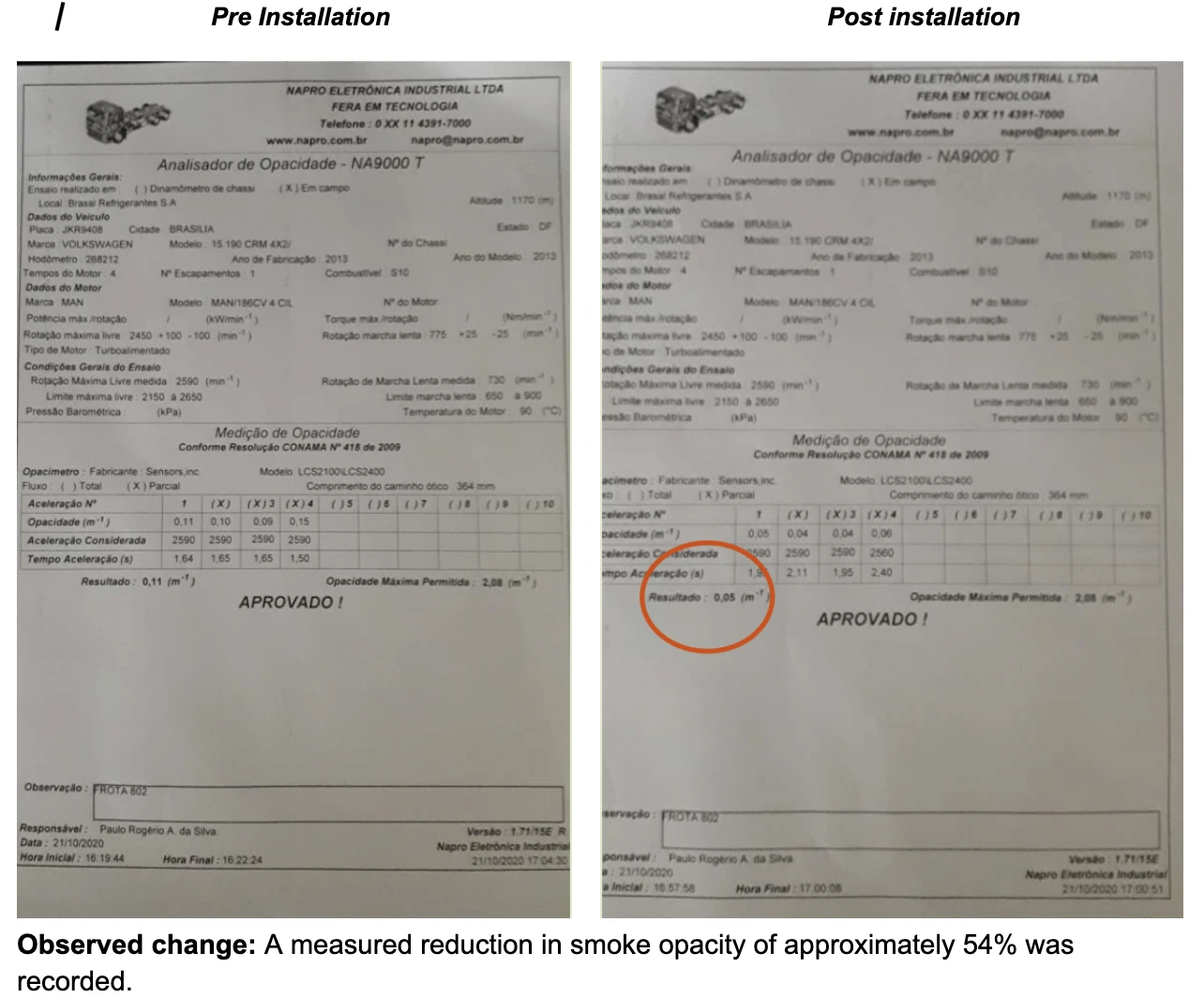
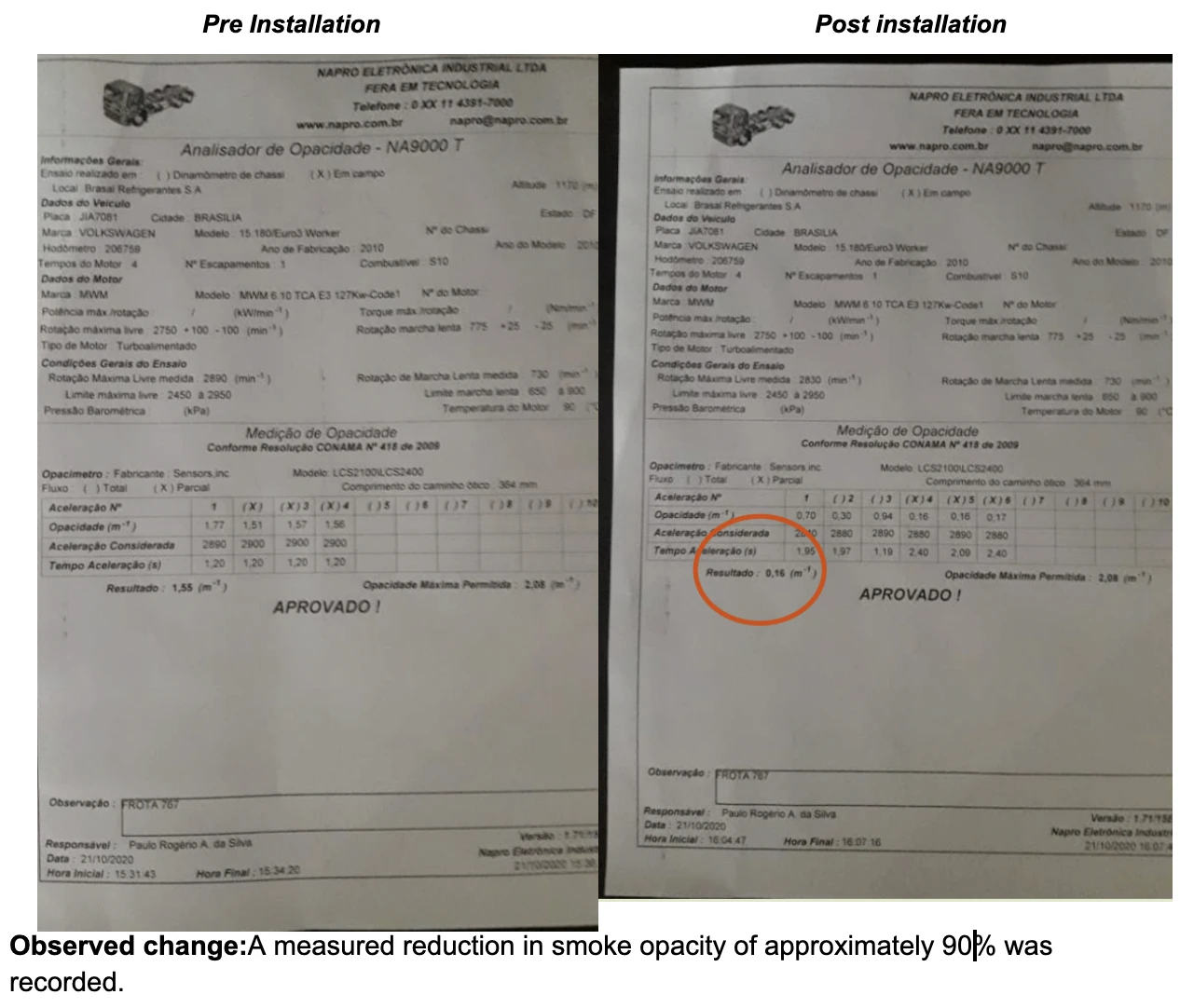
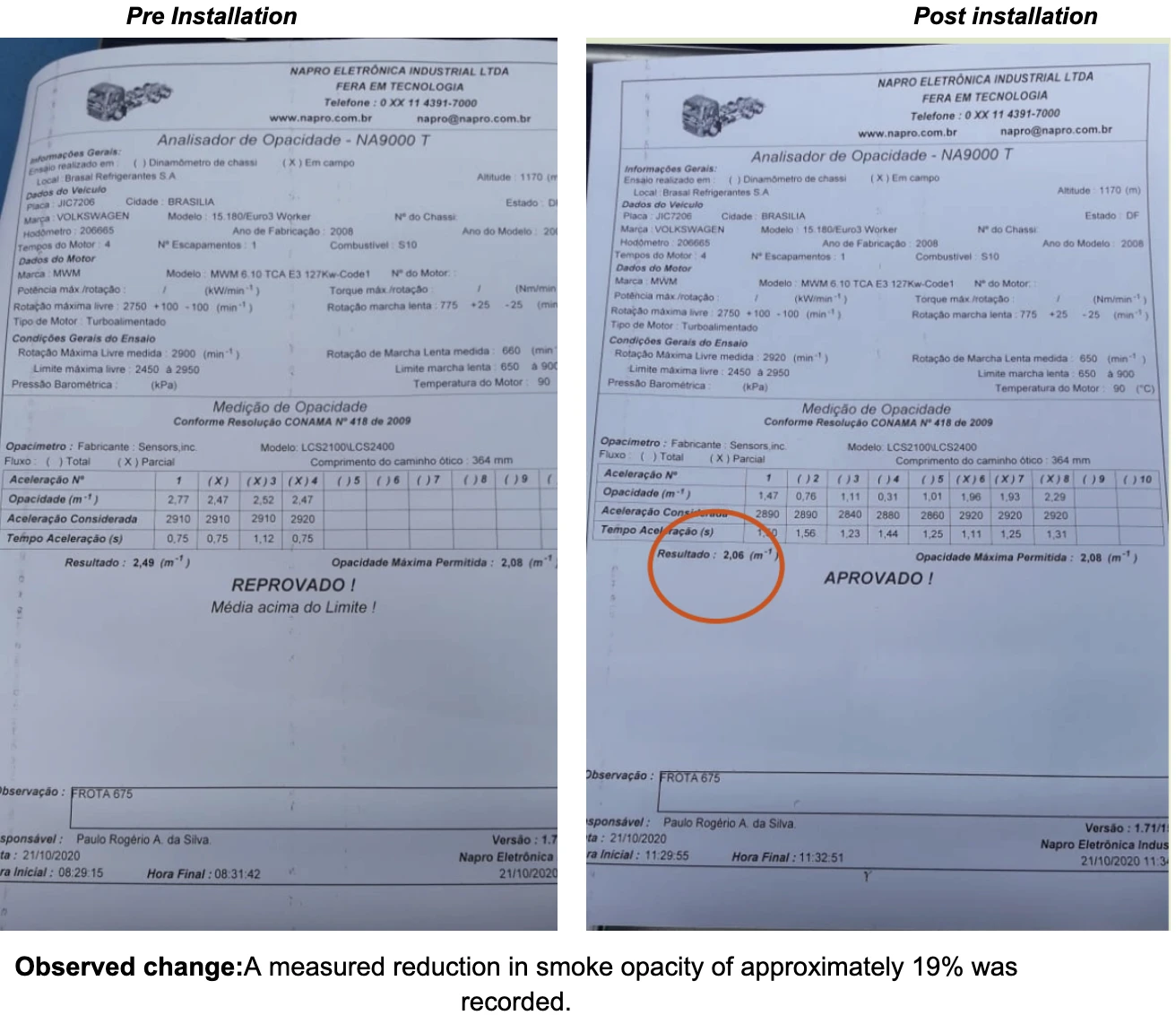
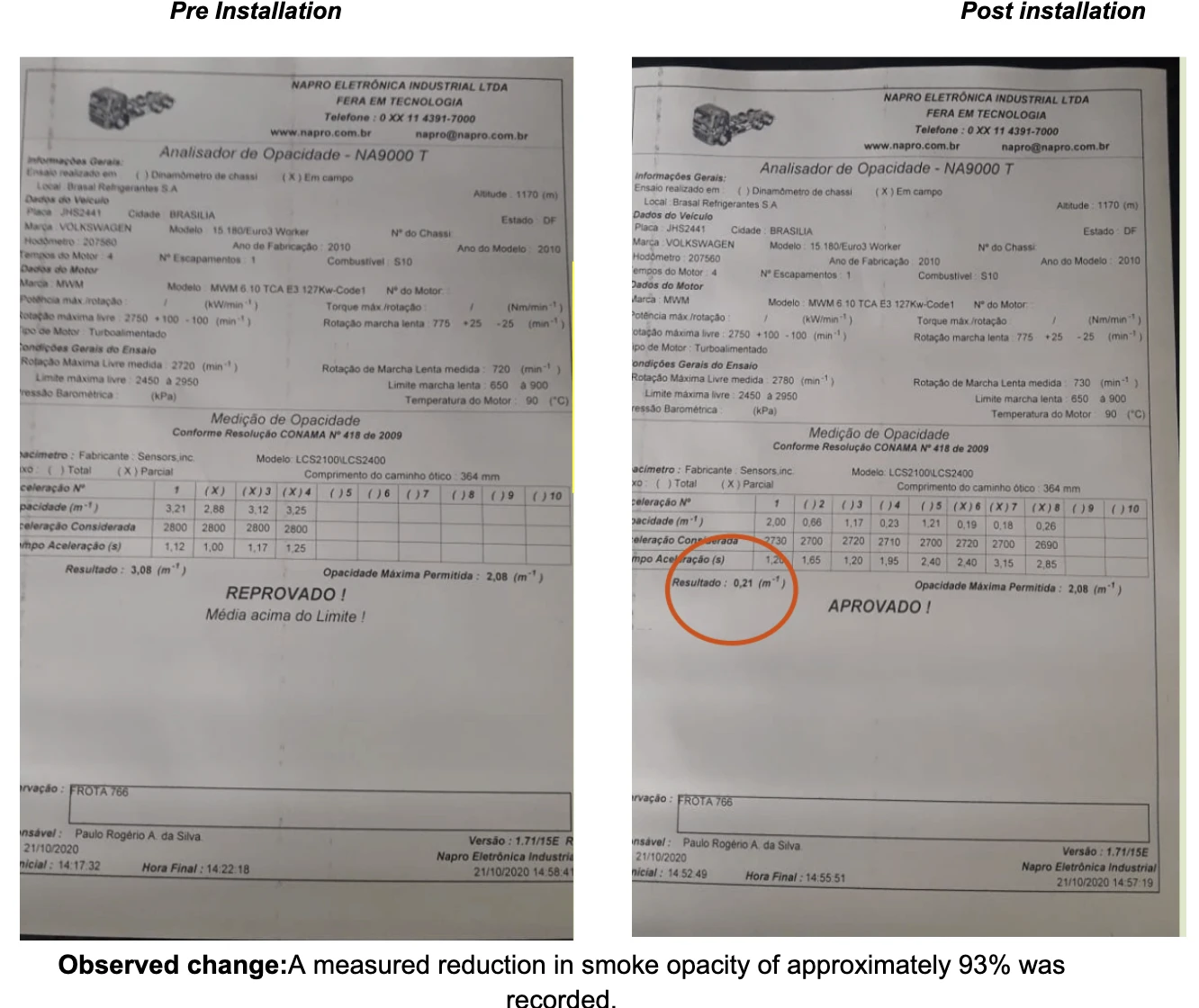
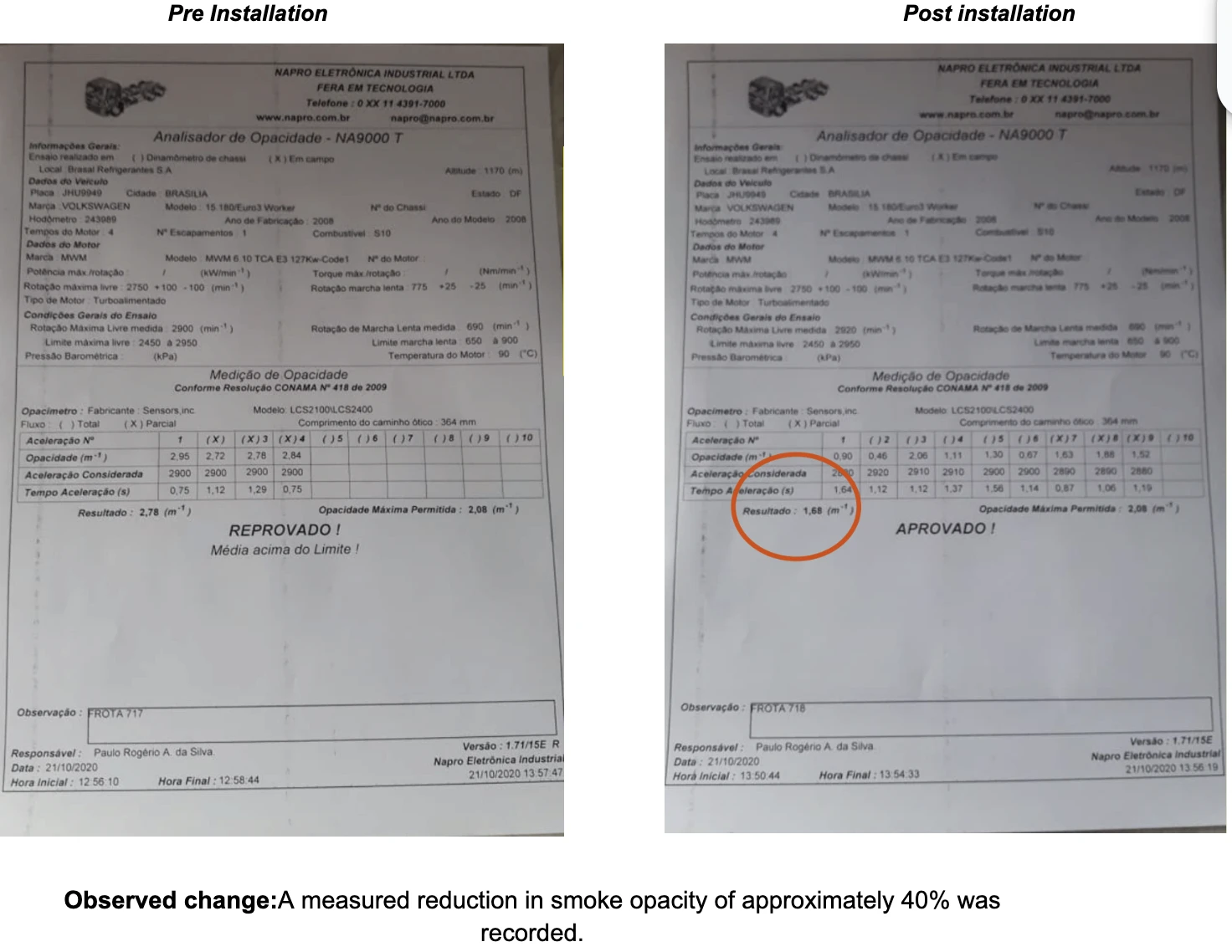
Smoke-opacity testing was conducted using a NAPRO NA9000 T certified opacity analyzer, with results assessed in reference to CONAMA Resolution No. 418 (2009), which defines maximum permissible exhaust opacity levels for diesel vehicles in Brazil.

What were the observed results following installation?

Across the five vehicles evaluated, documented test reports show that:

  • Vehicles exceeding smoke-opacity limits prior to installation met applicable thresholds following installation

  • Vehicles already within limits demonstrated further reductions in measured smoke opacity

Observed changes varied by vehicle and baseline condition, which is typical in real-world fleet testing.

In parallel, a six-month operational trial reported average performance improvements of around 10% on equipped vehicles when compared with non-equipped vehicles operating under similar conditions, as described in executive testimony.


“Everything we do is focused on sustainability, cost reduction, and productivity gains.” Five units were installed and tested over six months on comparable trucks. If my memory serves me correctly, we observed improvements of around 10% in vehicles equipped with SuperTech compared to those without it. In vehicles without the equipment, performance sometimes declined. With SuperTech, we observed gains. Those gains varied, but they supported the decision to proceed with investment.”

What were the observed results following installation?

Across the five vehicles evaluated, documented test reports show that:

  • Vehicles exceeding smoke-opacity limits prior to installation met applicable thresholds following installation

  • Vehicles already within limits demonstrated further reductions in measured smoke opacity

Observed changes varied by vehicle and baseline condition, which is typical in real-world fleet testing.

In parallel, a six-month operational trial reported average performance improvements of around 10% on equipped vehicles when compared with non-equipped vehicles operating under similar conditions, as described in executive testimony.
What is the takeaway for fleet operators and engineers?

The Coca-Cola BrasĂ­lia evaluation demonstrates that non-invasive, upstream combustion support technologies can be assessed through independent measurement and real-world operation without modifying vehicle systems.

This reference documents observed changes in smoke opacity and operational performance under specific conditions. It does not constitute a regulatory certification or guarantee of results. Outcomes may vary depending on vehicle condition, maintenance practices, fuel quality, and duty cycle.

Still Have Questions?

Our team is available to help you understand the best application for your vehicle, fleet, or industrial system.